You’ve done everything right. You completed your training, logged your practicum hours, registered with your regulatory body, and opened your practice. And then you sat down, looked at your empty calendar, and thought: now what?
Getting your first therapy clients in Canada is the hardest part of building a private practice — not because there aren’t enough people who need support, but because nobody automatically knows you exist. You’re not the only therapist in your city. You’re competing with established practitioners who have years of referral networks, full Google profiles, and Psychology Today listings that have built traction over time.
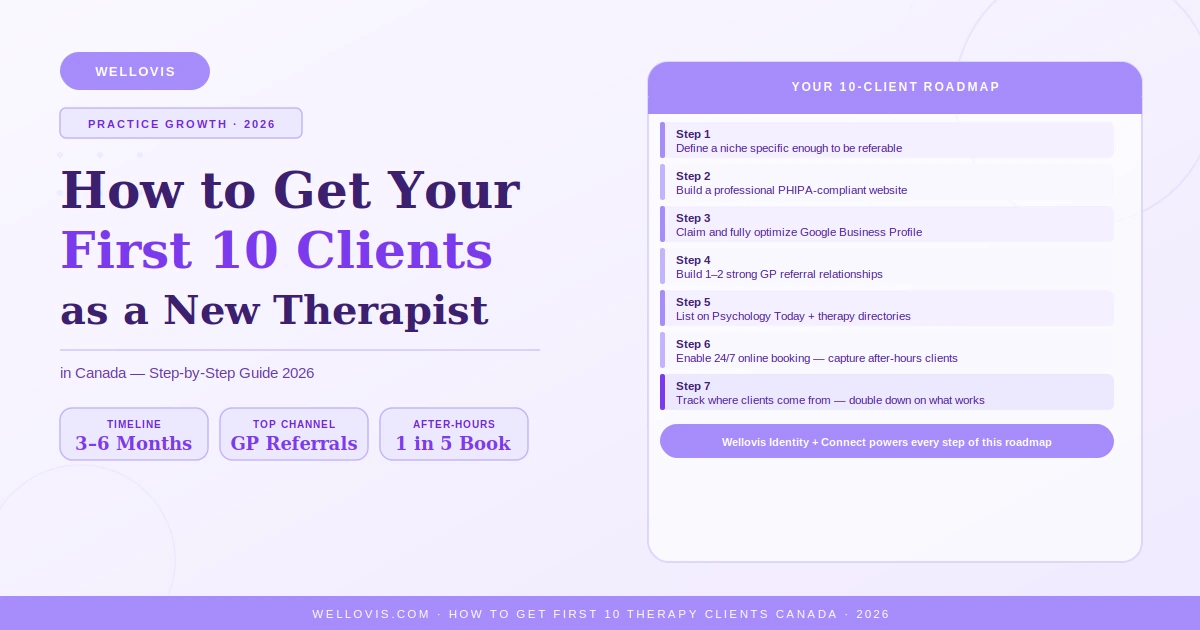
This guide gives you a clear, honest, step-by-step plan for how to get your first 10 therapy clients in Canada — what actually works in 2026, how long each channel takes, and exactly what to do first.
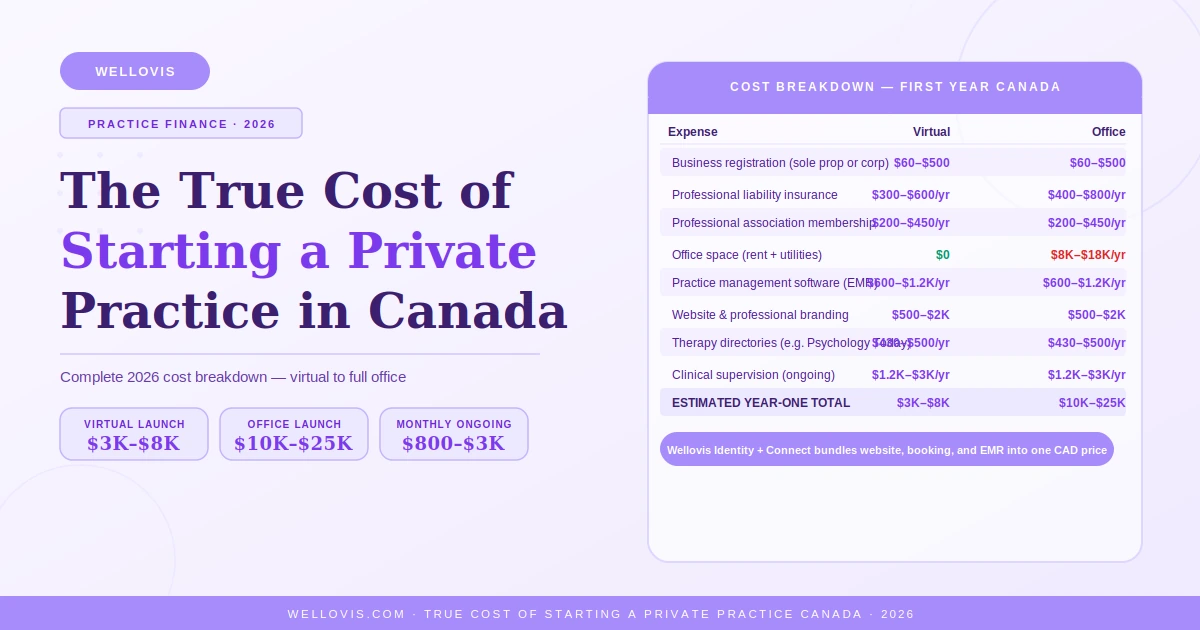
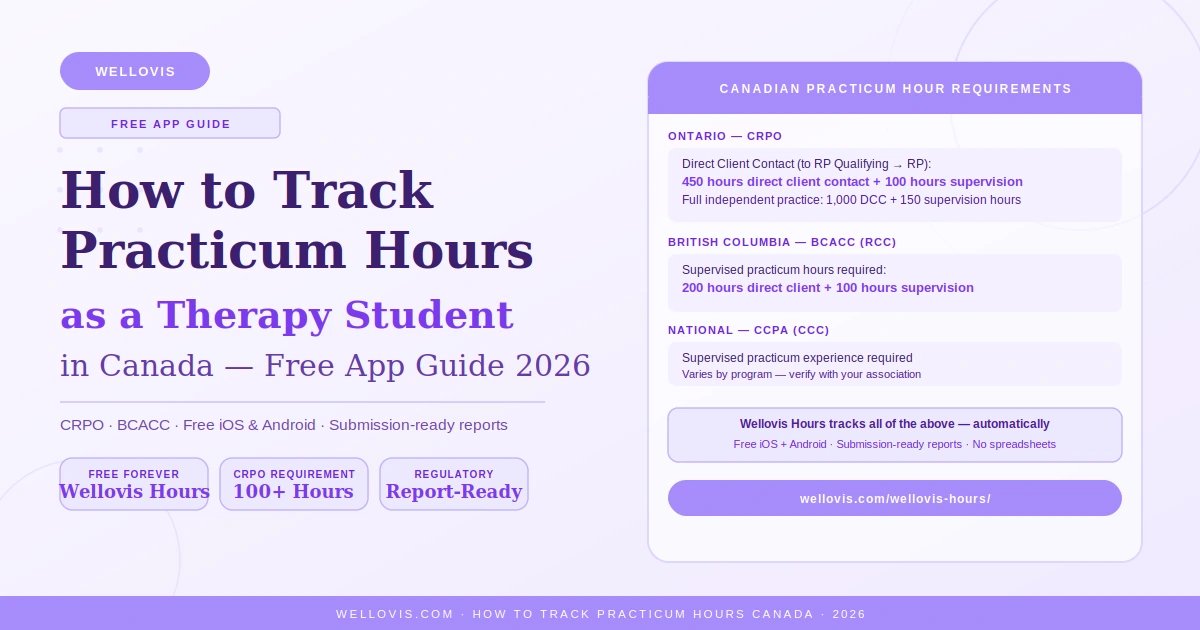
💡 Still in your supervised hours? If you’re still completing your practicum, read our guide on how to track practicum hours as a therapy student in Canada first — then come back here once you’ve registered. And see our breakdown of the true cost of starting a private practice in Canada before you budget your launch.
Step 1: Define Your Niche Before You Do Anything Else
The most common mistake new therapists make is trying to appeal to everyone. A referable niche is specific enough that someone immediately knows whether they’re your client:
- ❌ Not referable: “I work with adults dealing with anxiety and stress.”
- ✅ Referable: “I work with high-achieving professionals in their 30s who are functioning well on the outside and quietly burning out on the inside.”
- ✅ Referable: “I specialize in anxiety therapy for new mothers navigating postpartum life in Toronto.”
Specificity is not about excluding people. It’s about making it easy for someone — a GP, a colleague, a past client — to immediately think of you when they encounter someone who matches your description. Your niche should appear in your website headline, your Google Business Profile, your Psychology Today bio, and every referral card you hand out. Wellovis Identity builds this positioning language into your website and brand from day one.
Step 2: Build a Professional Website That Converts Visitors Into Bookings
Before you reach out to a single GP, before you create a Psychology Today profile — you need a professional therapy website. Every other channel sends curious people to your website to decide whether to book. A weak website makes every other marketing effort less effective.
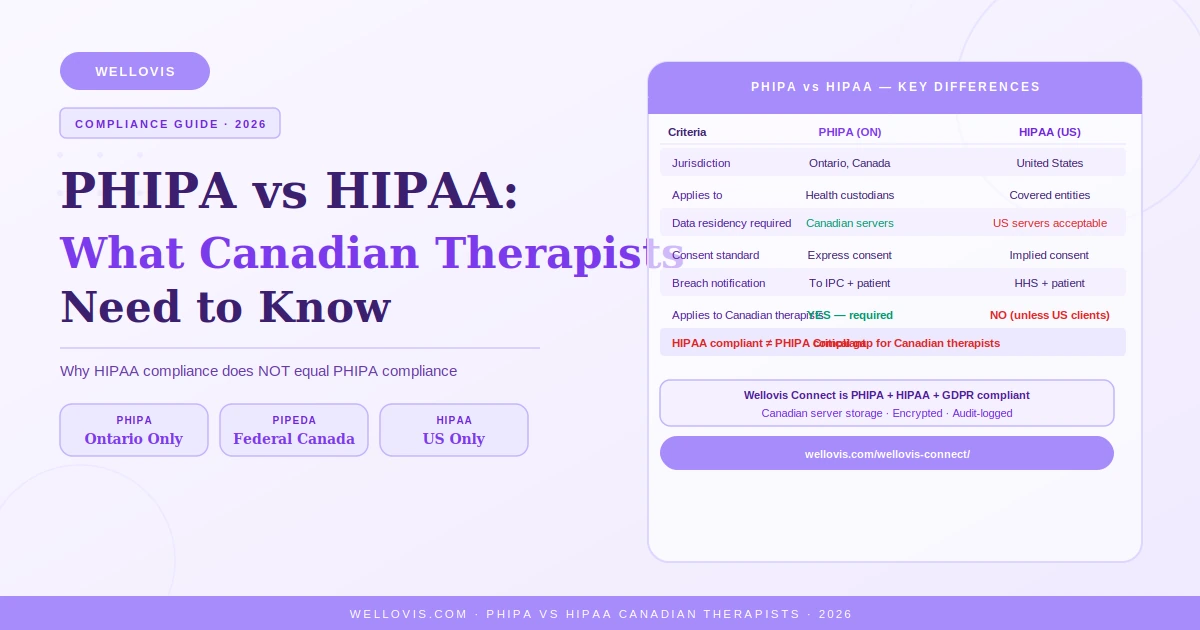
Your therapy website needs to do three things: communicate your niche in the first 5 seconds, make booking completely frictionless, and be PHIPA compliant. Wellovis Identity builds done-for-you therapy websites that are PHIPA-compliant, SEO-optimized, and integrated with Wellovis Connect booking from day one.
📖 Related Reading
Step 3: Claim and Optimize Your Google Business Profile (Free — Do This Today)
When someone in your city searches “therapist near me” or “anxiety therapy Toronto,” Google shows a local map pack before any other results. If you’re in that map pack, you get clicks. If you’re not, you’re invisible to the highest-intent clients in your area.
Your Google Business Profile is the single highest-return free marketing action available to you as a new Canadian therapist. Set your primary category to “Mental health service” or “Psychotherapist,” list every service individually with descriptions, add a direct booking link via Wellovis Connect, add a professional photo, and write a complete description using your niche language.
💡 Regulatory note on reviews: Soliciting and displaying client reviews is subject to guidance from your provincial regulatory body (CRPO, BCACC, etc.). Check your college’s advertising standards before enabling or promoting public reviews.
Step 4: Build One Strong GP Referral Relationship
Referrals from family physicians are the fastest, most reliable source of new therapy clients in Canada. A single GP who trusts your work can refer 3–5 new clients per month, consistently.
Prepare a one-page introduction: your name, credential, niche in plain language, the types of clients you work best with, and a direct booking link via Wellovis Connect. Start with the GP at your own family clinic or a nearby practice. Focus on a specific gap you fill. Follow up every 6–8 weeks with a brief professional update. Send a thank-you (without client details) when a referral books.
Step 5: List on Psychology Today and Therapy Directories
Psychology Today Canada is the most searched therapist directory in the country — approximately $42 CAD/month. Worth the cost if your profile is complete: a niche-specific headline (not your credential), a professional photo, and a direct booking link pointing to Wellovis Connect. Other directories worth listing on: Theravive, Theralist, and your provincial regulatory body’s public register.
Step 6: Enable 24/7 Online Booking — 1 in 5 Clients Book After Hours
Approximately 18–22% of therapy bookings happen outside standard business hours. A contact form that promises a 48-hour reply loses these clients. Wellovis Connect gives clients live visibility into your availability and lets them self-book instantly at any hour — with automated confirmation and reminders that reduce no-shows by 30–40%. Intake forms are integrated directly into the booking flow, PHIPA-compliant and customizable.
Step 7: Offer a Free 15-Minute Consultation Call
For new therapists without an established reputation, a free 15-minute consultation dramatically lowers the barrier to first contact. It’s not a therapy session — it’s a brief conversation where you confirm fit and book the first session before the call ends. Many experienced therapists remove the free consultation once their caseload is full. As a new therapist, it’s one of your highest-converting tools.
Step 8: Use Social Media Strategically — Not Constantly
Social media is not the fastest path to your first 10 clients. LinkedIn before Instagram — GPs and professional peers who might refer overflow clients are on LinkedIn. Your niche positioning statement goes in your LinkedIn headline. 2–3 Instagram posts per week on a specific theme builds credibility with potential clients deciding whether to book. In every bio: state your niche and link to your booking page.
Step 9: Publish One Blog Post Targeting Local Search
Content marketing is a long game but the channel with the highest long-term return. A single well-written blog post targeting a local search query generates consistent enquiries without ongoing spend. For a new therapist specializing in anxiety in Toronto: “Anxiety therapy in Toronto: what to expect in your first session” or “5 signs you might benefit from CBT.” Each post links to your services page and your Wellovis Connect booking page. A reader who finds you through Google already trusts you before they click Book.
Step 10: Track Where Your Clients Come From and Double Down
Ask every new client how they found you. Track the answers. After your first 10 clients, two or three channels will account for 80% of them. If 7 came from GP referrals, you need two more GP relationships — not Instagram. If 6 came from Google, you need another city-specific service page on your website. The data tells you exactly where to invest your next 90 days.
📖 Related Reading
Frequently Asked Questions
How long does it take to get your first therapy clients in Canada?
Most new Canadian therapists who apply a consistent strategy — professional website, Google Business Profile, GP outreach, and a directory listing — reach their first 10 clients within 3–6 months. Virtual-only practices often fill faster because their potential client pool is province-wide rather than city-specific.
What is the fastest way to get therapy clients as a new therapist in Canada?
The fastest path combines GP referrals (high trust, high conversion, can generate clients within weeks of one good introduction) and 24/7 online booking via Wellovis Connect (captures clients at the moment of decision, including after hours). A complete Google Business Profile is the free accelerant that makes both more effective.
Should I list on Psychology Today to get clients?
Yes, for most new therapists in Canada — but only with a fully completed profile. A specific headline, professional photo, and a direct booking link pointing to your Wellovis Connect page generates consistent leads. A half-completed profile generates almost nothing.
How do I market my therapy practice without feeling salesy?
The channels that work best for therapists — a professional website, a Google Business Profile, helpful blog content, and GP referrals — require clarity and accessibility, not self-promotion. Being specific about who you help and making it easy to book is genuinely helpful to everyone involved. None of that is selling.
Do I need practice management software to get clients?
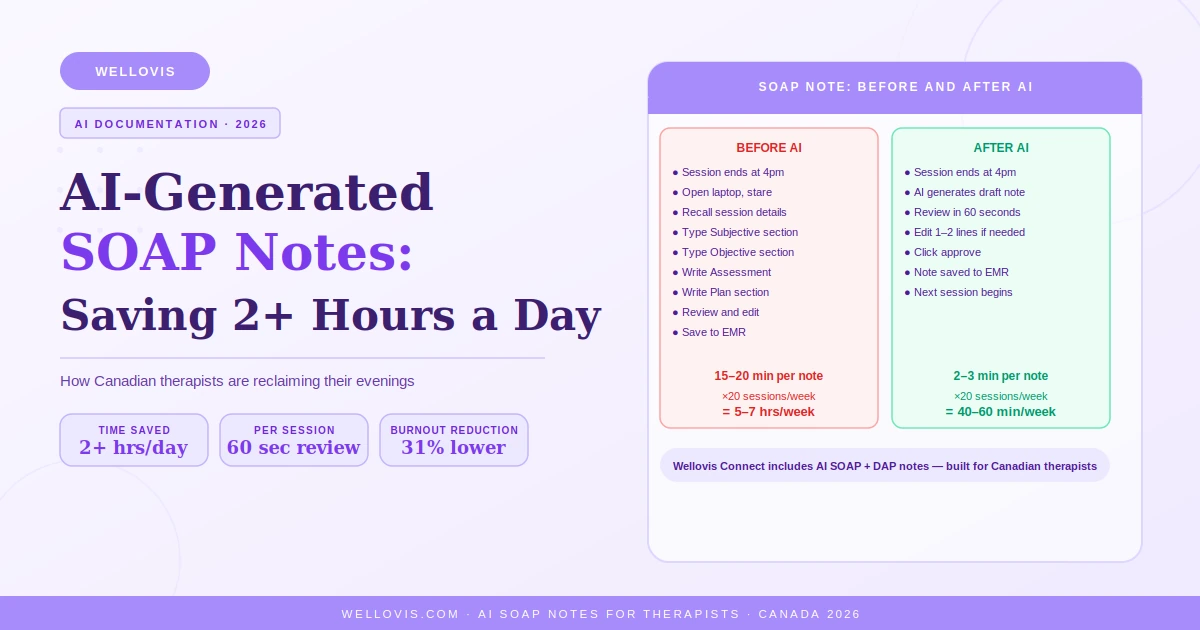
You don’t need it to get clients — but you need it to keep them and operate professionally. Wellovis Connect handles online booking, automated reminders, PHIPA-compliant intake, clinical notes, and billing in one place. When integrated with your website via Wellovis Identity, it becomes a client acquisition tool as much as a management tool — enabling 24/7 self-booking and reducing no-shows by 30–40%.